

The overall body condition scoring of the camels in a certain ecosystem can better tell the adaptation of certain breed in an ecosystem. Here is the study about the body condition scoring of some camel breeds in mountainous ecosystem.

Balochi horse is found in ancient historical Balochistan (Pakistani and Irani Balochistan, parts of Punjab, Sindh and Khyber Pakhtunkhawa. This breed is evolved and reared by the Balochi nomadic tribes.

This breed of camel purely belongs to the pastoral community of Jath. They are entirely …

Camel Was Domesticated for Milk Camels were originally domesticated for their milk. Following the move …
Marrecha camel is one of the precious camel genetic resources of Cholistan desert. Cholistan desert …


Kharani camel is found in the Chaghai-Kharan desert of Balochistan Pakistan. The best milch animal in the world. There is high variability within the breed for milk production. In the wet days of the year, when there is succulent vegetation, some specimen of the breed produce up to 38 litre of milk per day. Unfortunately, this breed is under severe threat. The main cause of erosion is the depletion of Thagaz (Halloxylon spp).


This breed of camel belong to Pashtun/Afghan Kochis (nomads). They travel from central Afghanistan to north-east Balochistan. Some nomads even cross Suleiman mountains and inter in Indus delta. Some tribes of the Kochis cross Bolan pass and enter in Kachhi area of Balochistan and some go further and inter in Sindh province. Unfortunately, some Kochis are leaving camel culture and adapted tractors for luggage transportation because of the hinders in the historic routes and war and conflict in the region.
Brahvi camel is under threat. The population is?speedily?going down. There are many reasons for this …

Kohi camel can browse up to the height of 5 meter on Acacia and other trees of the region. This picture was shot in winter and the camel browse on the Acacia modesta tree.

Camel is the well adapted animal in Suleiman mountain for work in hostile topography of the region. The leaves of a bush are loaded on camel. These leaves are use for ropes and mat knitting. Such mats are use by the camel pastoralists for housing/huts buildings.

Calf care of Kohi camel by Buzdar camel herders. Ghulamani Buzdar tribe is famous for camel and goat keeping. Some people call Kohi camel as Ghulamani camel too.

Kohi camel is highly adapted to the mountainous ecology of Suleiman Mountainous Region. The breeds is highly diversified and there are many shades and colours. Some colours and phenotypic characters works as genetic markers and the pastoral people are well known of them

Grazing flock of Butchi sheep in Cholistan desert of Pakistan. The regions is the hot spot of animal genetic resources for food and agriculture.
Summary Falling in southern Punjab, Cholistan is one of the largest deserts of the country …


The title of the photo is self explained.
Hunger is not a natural disaster ?? it’s a political problem..
<strong>Author:<a title=’Dr Abdul Raziq’ href=’http://www.articlesbase.com/authors/dr-abdul-raziq/825282′>Dr Abdul Raziq</a></strong><br /><p>Camel has adapted mechanisms that allow it to …

These native livestock breeds not only provide a source of livelihood but also play a role as companions and family members. Livestock breeds are evolved with precious indigenous knowledge, therefore a threat to the breeds is a threat to the indigenous knowledge. The local animal genetic resources are part of the socio-cultural life of the keepers. Many traditions and customary laws articulate around the livestock breeds.

In my view, one of the main problems (the root cause) is the low/zero participation of the native livestock breeders in the fabrication of policies and implementation of development projects for livestock development. All the definitions and concepts regarding the management, breeding, feeding and sustainable development of livestock are derived from the western school of thought. The western school of thought for livestock is mainly based on high input and intensive farming with specialized breeds and feeding systems. Such concepts are very hard to fit in the extensive, low input and multipurpose system. Taking on board the livestock keepers for livestock development can bring a cool breeze in this sector, though the process will take a bit longer time.
We are the custodian of the livestock breeds, so we tried our best as our …
The land inhabited by Pashtun pastoral people in northeastern Balochistan is owned by communities. Only …
Habitat: The production area of this breed is the same like that of Shinghari, i.e. …
Habitat: The production area of this breed is Khurasan, Suleiman mountainous region, Marri and Bugti …
Habitat: Musakhail, and other mountainous area of Suleiman mountains, Zhob, Sherani, Kakar Khurasan, Loralai, Kohlu, …
Suleiman Mountainous Region (SMR) is part of the dry land ecosystem of Pakistan. SMR receives …
Habitat: Chaghai Kharan desert especially Raskoh mountains of the region is the home track of …

Khorasani or Khurasani goat is one of the most important goat genetics of the historical Arya Warsha
Habitat: Musakhail, and other mountainous area of Suleiman mountains region. There are many tribes, rearing …
Habitat: Kachhi basin is the home tract of the breed. The area has very high …
Arable farming promote land grabbing in South Asia and central Asian countries. Afghanistan and Pakistan …

Kuchi or Kochi but in Trouble Afghanistan is one of the important countries of the …
Habitat: The major habitat of the breed is the central Brahvi land. The nucleus areas …

Bybrik or Marriwal Sheep Breed The breed is mainly raised for lamb production. The breed …
Habitat: Found in Musakhail district of northeastern Balochistan and the main tribe of the breed …
Habitat: Kakari sheep is found in all Kakar belt. The main areas of the breed …
Habitat: The original area of the breed is Zhob (Thora khula, Shighala, Chukhen, Kunder.Mandokhail, Sherani, …
Habitat: The nucleus of the breed is Wani , Gosa, Babar, Kapip areas of Zhob …
Raigi camel is predominantly found in the historic Khurasan region. The region had very rich …
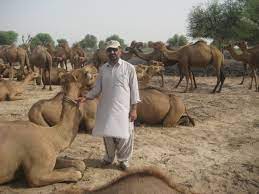
Lassi camel is found in coastal area of Balochistan and Sind. The climate of the …
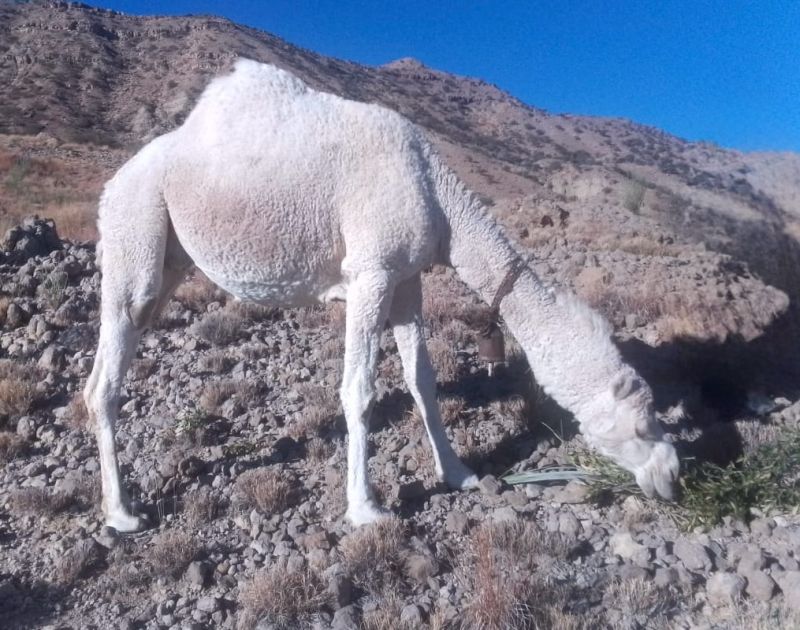
Balochistan, the largest province of Pakistan, is home to a remarkable population of camels. Almost …

Kharani camel Kharani camel is found in the desert ecosystem of the Chaghai Kharan desert …

In continuation of the previous blog Jathnasal or Raidi camel Breed The habitat of Raidi …

Livestock Breeds and its ecosystems in Balochistan In continuation of the previous post, I start …
In Balochistan province of Pakistan, there are many livestock species which are well adapted to …
Ecological zones of ?Balochistan province of Pakistan The ecological zones already presented in the literature …

Dr. Raziq Kakar has published many publications with a high repute on subjects as; camel milk production potential, camel milk composition, camel socioeconomic importance in agriculture & economy, camel breeds identification, camel domestication, native livestock breeds identification and documentation, traditional knowledge, breeding goals documentation, and ecosystem research.

The Southern hemisphere of the planet earth is the cradle of animal domestication and almost all the livestock species for food and agriculture traveled from South to North. During the last 100 years, gene flows from South to North have been dwarfed by flows in the opposite direction, from North to South. Large numbers of animals, semen, embryos, and eggs are shipped to developing countries, and Northern breeds (particularly of pigs, poultry, and dairy cattle) have become firmly established in various countries. This development led to the erosion of livestock biodiversity in the South.

I received a report about the swelling head disease from a colleague from Mithi district …

Small scale production system is very important for food security in the climate change context and conservation of biodiversity. Millions of people around the world are involved both in production and consumption through this system. Such a system is very much resilient to climate change and droughts. While using a very low or neglected quantity of fossil oil, they are mitigating climate change. The system is the custodian of the precious biodiversity of the agroecosystems, rich with biodiversity and in harmony with nature. Unfortunately, forces like, globalization, open market economies, gene control and industrialization/mechanization in agriculture are threatening this system. There is utmost need to characterize, document, visualize and prioritize this system both as a food security option and conservation of biodiversity. Also, it is the need of time to give the opportunity to play its role in the future food production systems.

The world is passing through the very challenging food security crisis. Million of people needs food aid. The policymakers need to think about this alarming issue.