
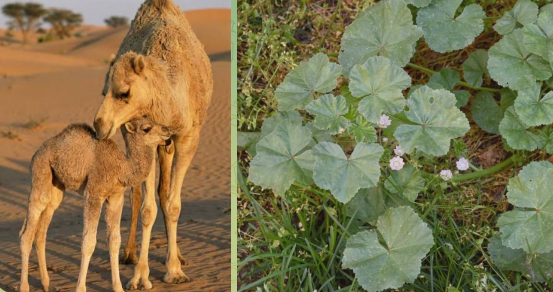
Malva sylvestris L., commonly known as common mallow, is a medicinal plant belonging to the Malvaceae family whose aerial parts particularly leaves and flowers constitute a rich source of bioactive metabolites. The phytochemical composition varies significantly between plant parts, with leaves generally containing higher concentrations of phenolic constituents than flowers.
Composition
Mucilage The most characteristic bioactive constituents of mallow are mucilages, complex carbohydrate polymers that constitute approximately 6–8% of leaf dry weight and up to 10% of flower dry weight.
These hydrocolloid compounds primarily comprise galacturonorhamnans and arabinogalactans, which exhibit remarkable water-binding capacity. Upon hydration, mucilage polymers swell extensively, forming viscous, gel-like dispersions with notable demulcent and laxative properties. The mucilage matrix creates a protective biofilm over mucosal surfaces, shielding inflamed epithelial tissues from mechanical irritation and chemical insult by gastric acids and alimentary salts.
Flavonoids The flavonoid profile of M. sylvestris includes hypolaetin-3-glucoside and gossypetin-3-glucoside as principal aglycone derivatives. Quantitative analysis reveals substantial differences between plant organs: leaves contain 21.85–27.18 mg/g dry matter of total flavonoids and 11.82–15.11 mg/g of phenolic compounds, whereas flowers accumulate significantly lower concentrations (3.50–4.95 mg/g and 1.40–1.97 mg/g, respectively). This disparity suggests that leaves constitute the primary source of antioxidant phytochemicals.
Anthocyanins and Tannins Flower pigmentation is attributed to anthocyanin glycosides, predominantly malvin (malvidin-3,5-diglucoside), which contribute both aesthetic value and bioactive functionality. Tannin content exhibits inverse distribution compared to flavonoids, with leaves containing 1.86–2.18 mg/g and flowers 0.86–1.18 mg/g dry matter. These polyphenolic compounds confer astringent properties that complement the demulcent action of mucilages.
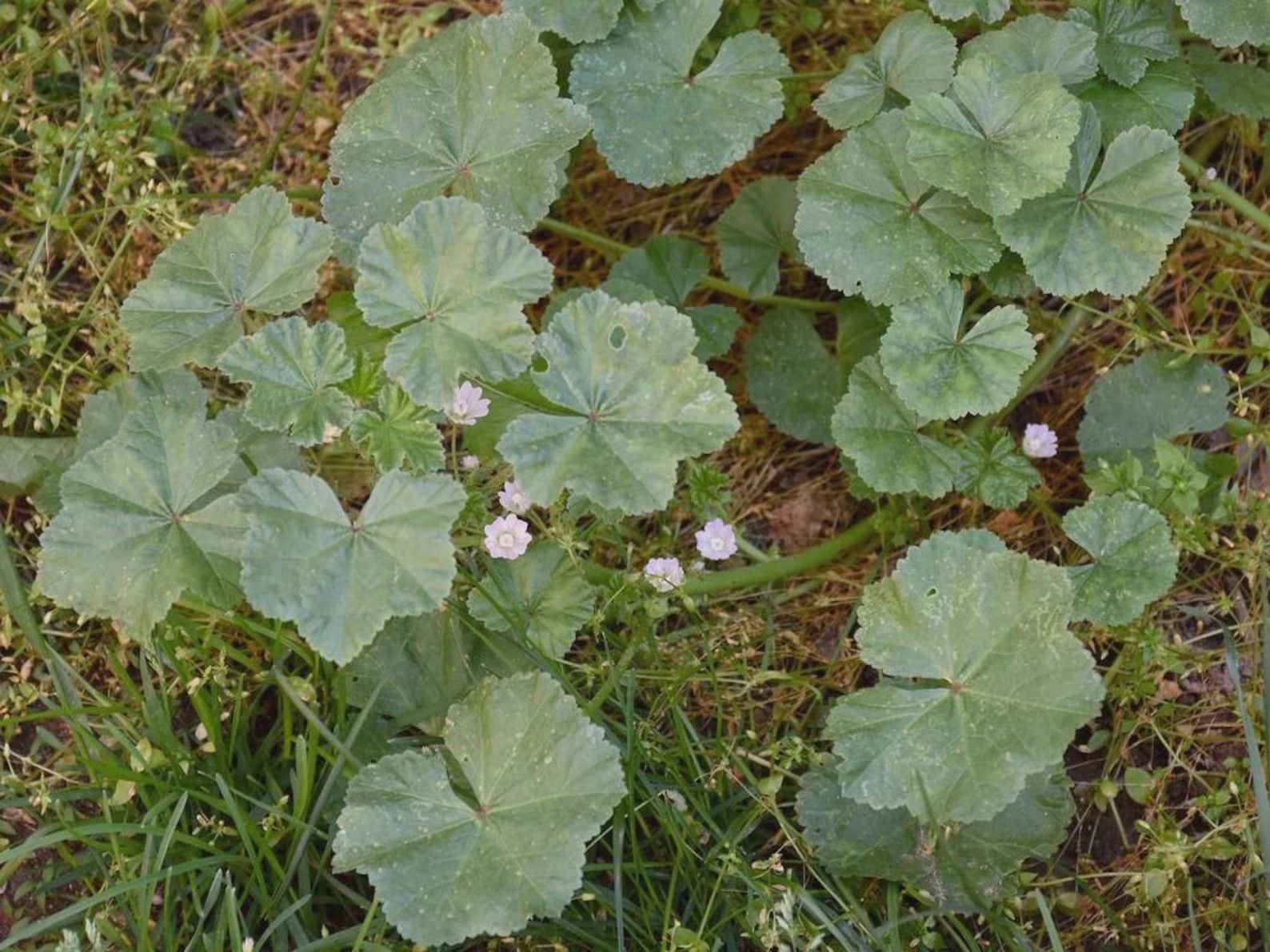
Pectic substances, a class of complex polysaccharides localized in primary cell walls and intercellular layers, represent another significant bioactive fraction. These hot-water-soluble heteropolymers exhibit pronounced gelling capacity and contribute to the overall mucilaginous character of mallow preparations. Minor constituents include reducing sugars, oxalates, and resinous compounds.
Pharmacological Activities
Antioxidant Capacity
The antioxidant potential of mallow extracts is attributable to the synergistic action of multiple phytochemical classes: phenolic acids, flavonoids, carotenoids, and tocopherols. These compounds function as free radical scavengers, interrupting oxidative chain reactions and protecting cellular macromolecules from oxidative damage. This activity has therapeutic implications for inflammatory conditions associated with oxidative stress, including rheumatism and other inflammatory arthropathies.
Anti-inflammatory Effects
The anti-inflammatory activity of mallow is primarily mediated through two mechanisms: direct modulation of inflammatory cascades by flavonoids, and physical protection of mucosal surfaces by mucilage polymers. The mucilaginous layer formed upon contact with aqueous media creates a barrier that prevents direct exposure of inflamed tissues to irritants, thereby reducing pain and promoting tissue regeneration. This dual mechanism underlies the traditional use of mallow in treating gastritis, peptic ulceration, and inflammatory bowel conditions.
Antimicrobial Properties
Methanolic extracts of M. sylvestris demonstrate broad-spectrum antimicrobial activity against both Gram-positive and Gram-negative pathogens. Documented susceptible organisms include Staphylococcus aureus, Staphylococcus epidermidis, Bacillus cereus, Bacillus anthracis, Escherichia coli, Klebsiella pneumoniae, and Pseudomonas aeruginosa. This antimicrobial spectrum supports the traditional application of mallow in treating bacterial diarrhea and throat infections.
Respiratory and Expectorant Effects
The mucilaginous constituents of mallow flowers confer significant antitussive and expectorant properties. Upon ingestion, mucilage polymers form a protective coating over pharyngeal and bronchial mucosa, reducing irritation that triggers cough reflexes. This demulcent action, combined with mild antimicrobial effects, explains the efficacy of mallow preparations in managing dry cough, hoarseness, and upper respiratory tract infections.

Gastrointestinal and Urinary Applications
Mallow demonstrates dual regulatory effects on gastrointestinal function: at low doses, it acts as a mild astringent and anti-inflammatory agent, while higher doses produce laxative effects through mucilage-induced increases in intestinal water content and bulk. The plant is traditionally employed for constipation, dysentery, and bladder infections. Its diuretic properties, attributed to flavonoid glycosides, support its use in urinary tract irrigation and prevention of kidney stone formation.
Therapeutic Dosage
Standard Infusion: One tablespoon of dried leaves is steeped in boiling water for 10 minutes, then strained. This preparation is suitable for treating gastrointestinal complaints and as a mild sedative.
Cold Maceration: Five grams of leaves are placed in cold water, brought to boiling, and simmered for five minutes. After cooling and straining, the preparation is administered three to four times daily. Addition of honey enhances palatability and potentiates antianemic effects.
Flower Tea: Dried flowers are infused in hot water for 10–15 minutes. This preparation is particularly effective for cough and hoarseness due to high mucilage content.
For nephrolithiasis, a decoction of 100 g leaves in 1.5 L water is prepared, strained, and combined with one tablespoon olive oil. Administration before meals is recommended. A synergistic formulation combining 100 g mallow leaves with 100 g chamomile flowers, prepared similarly with olive oil, is employed for renal colic.
Boiled leaf preparations are applied topically for wound healing, acne treatment, and management of eczema and burns. The mucilaginous poultice creates a protective barrier while delivering anti-inflammatory flavonoids to affected tissues.
Clinical Considerations
To preserve thermolabile bioactive constituents, boiling should not exceed five minutes. Flowers require gentle pressing during preparation to facilitate complete mucilage extraction. Excessive heating degrades mucilage polymers and reduces therapeutic efficacy.
Individuals with known hypersensitivity to Malvaceae plants should exercise caution. Patients with diabetes mellitus require monitoring, as mallow may potentiate hypoglycemic effects through unclear mechanisms. Due to its oxalate content, patients with calcium oxalate nephrolithiasis should consult healthcare providers before regular use.
Potential additive effects with antihypertensive, antidiabetic, and diuretic medications should be considered. Mucilage may impair absorption of concurrently administered oral drugs; therefore, mallow preparations should be taken at least two hours apart from other medications.
Traditional Medicine Context
In traditional Persian and European herbal medicine, M. sylvestris is classified as a “mild” remedy with versatile applications. It is employed to dilute concentrated humors and moderate excessively thin ones, reflecting its adaptogenic qualities in traditional frameworks. Boiled preparations are indicated for cough, dysentery, cystitis, bronchitis, and emesis, while gargles relieve pharyngeal irritation and mucus accumulation. The leaf decoction (300 g in 1 L water) serves as an analgesic in folk practice.
Mallow in camel nutrition
Studies have shown that the consumption of the mallow plant by camels led to an increase in the antioxidant activity of raw and fermented camel milk. The mallow plant can increase the antioxidant activity of milk through mechanisms including the presence of bioactive compounds, increased activity of antioxidant enzymes, reduced lipid peroxidation, and synergistic effects with other nutrients. Flavonoids and phenolic acids in mallow cause the elimination of free radicals and increase the antioxidant status of milk.
According to the research, the consumption of the mallow plant by camels led to a decrease in the total microbial load and the mold population in the milk of camels fed with this plant. In general, flavonoids and flavonols in mallow have antimicrobial effects, which are probably caused by the combination of extracellular proteins, complex formation with the cell wall, or disruption of the cell membrane of microorganisms. Phenolic compounds can exhibit their antimicrobial effects by directly inhibiting microorganisms and binding to their extracellular enzymes.
The studies showed that the use of mallow in the feeding of camels caused an increase in the concentration of short-chain fatty acids and unsaturated fatty acids C18:1, C18:2, C18:3, and a decrease in saturated fatty acids C:18 and C:16.
Conclusion
Malva sylvestris represents a pharmacologically versatile medicinal plant whose therapeutic activities are rooted in its unique phytochemical composition. The combination of mucilaginous polysaccharides, flavonoids, anthocyanins, and tannins confers anti-inflammatory, antimicrobial, antioxidant, demulcent, and laxative properties that support its extensive traditional use. Modern pharmacological studies corroborate many ethnomedicinal claims, particularly regarding mucosal protection, respiratory relief, and gastrointestinal regulation. However, standardization of preparations and clinical validation of efficacy through controlled trials remain areas requiring further investigation.
References
- Zohra, H. (2003). Encyclopedia of Medicinal Plants. Tahsin Publications, 2nd ed. (2011), pp. 130–131.
- Kiner, A. (2007). Knowledge of Medicinal Plants. Abijah Publishing Center, 1st ed., pp. 45–46.
- Omid Beigi, R. (2011). Production and Processing of Medicinal Plants. Tarbiat Modarres Publication.
- Tabarrok, R., Yousef, Z., & Azadi Qurna, H. A. (2012). Chemical composition and antioxidant properties of common mallow (Malva sylvestris L.). Journal of Research in Agricultural Science, 8(1), 59–68.
