
Color Bleeding in Water
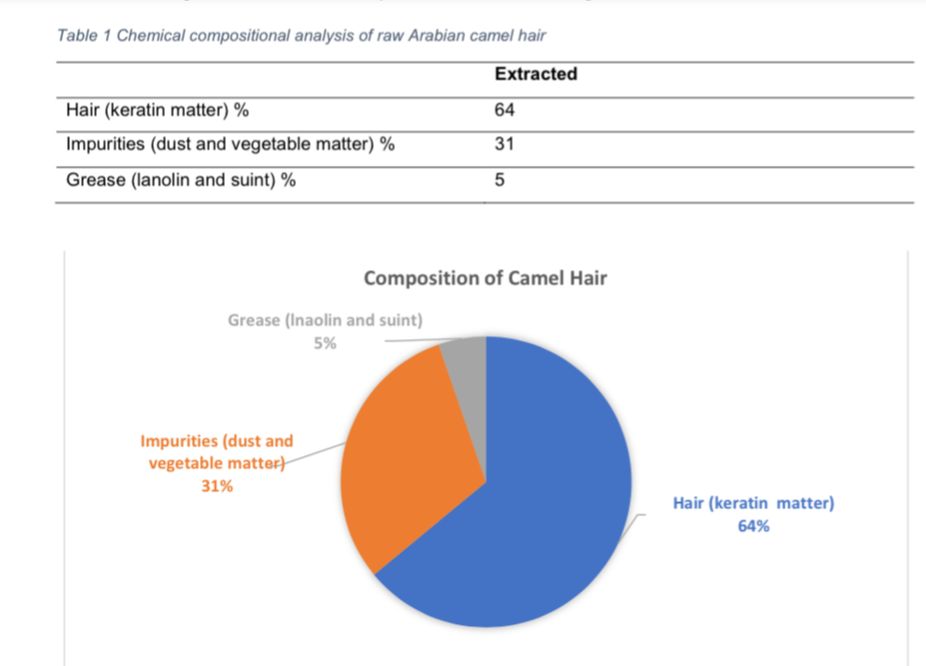
Can camel wool bleed in water? Is its natural color discharged into the water? I put camel wool in a bucket and filled it with hot water to wash it, but something unexpected happened: the water turned dark brown, just like the Majaheem camel’s wool. I posted the photographs on social media, and many individuals had diverse reactions. They assured me that the natural color of the wool never bled in the water. The dark brown color emitted in the water is caused by the color of the dirt (mostly sand). Nature’s oily texture, thickly interwoven carpet-like fur, and the sand cum dirt all together produced a dark brown color combination.

I’d be grateful if someone could provide feedback. I’m waiting for someone to share an expert opinion in this regard.
The incredible camel Fur is woven by nature
The wool has created a densely woven blanket that is difficult to separate or sort out. As camels have protective outer coats of coarse fiber that may grow as long as 15 inches (40 cm). The fine, shorter fiber of the insulating undercoat, 1.5–5 inches (4–13 cm) long, is the product generally called camel hair, or camel hair wool, making a dense fur to minimize moisture evaporation from camel body and protecting from the cold waves in winter.

How do you separate camel wool, which is naturally very densely interwoven? The carding process is extremely difficult. I’d appreciate it if someone could provide me with feedback. What is the best way to sort camel wool at home?
The analysis of camel fleece in the UAE

Dear kakar sab.
I am also graduate student of DVM from Peshawar. One things I saw in our tradition especially ( kakar khurasan ) , our grandmother or mother were saying about the Camel wool, they say ,If you see a Camel, you should be collect the wool from Camel for one purpose to stop bleeding of nose ( if anybody face to this problem we use Camel wool as stopper of bleeding) .
But I don’t know what is reason behind this logic.
Yes, I understand your point. During my PhD work, the same story was told by Qaisar Khan Marri in Kohlu. Nosebleeds (epistaxis) are very common, especially in the hot summers. Traditionally, one makes cord from camel wool and tie around the neck. This is a traditional practice. Some people even burn the camel wool and inhale the smoke for the same purpose.
All the best and thanks for your feedback.
Comment by Mr. Hazaa Alazeezi
It might be because of the wool texture that acts like cotton, if we spry water we will be able to find the water drops hanging on the wool which might give us an indication that the wool has a barrier of resistance that helps maintain the body temperature, so as u mentioned it became like a blanket maybe because it’s unattached of the body, so all the substances are free to be execrated, thank you for such an interesting subject
Dr. Gareth comment
Looks like it has become caked with sweat or oils from the skin. This dissolves and colors the water perhaps
I have read this recent blog post. Camel hair is similar to human hair they contain pigments called melanin located in the hair follicles. It can never lose its pigments in regular washing water.
But the fact that around 40% of the fleece is impurities and many of which are water soluble, so probably this is what result in coloration of the washing water.
Washing any type of animal hair requires very gentle process and it’s critical to avoid agitation. The presence of surface scales on animal hair result in felting during washing. Felting increases with temperature and agitation.